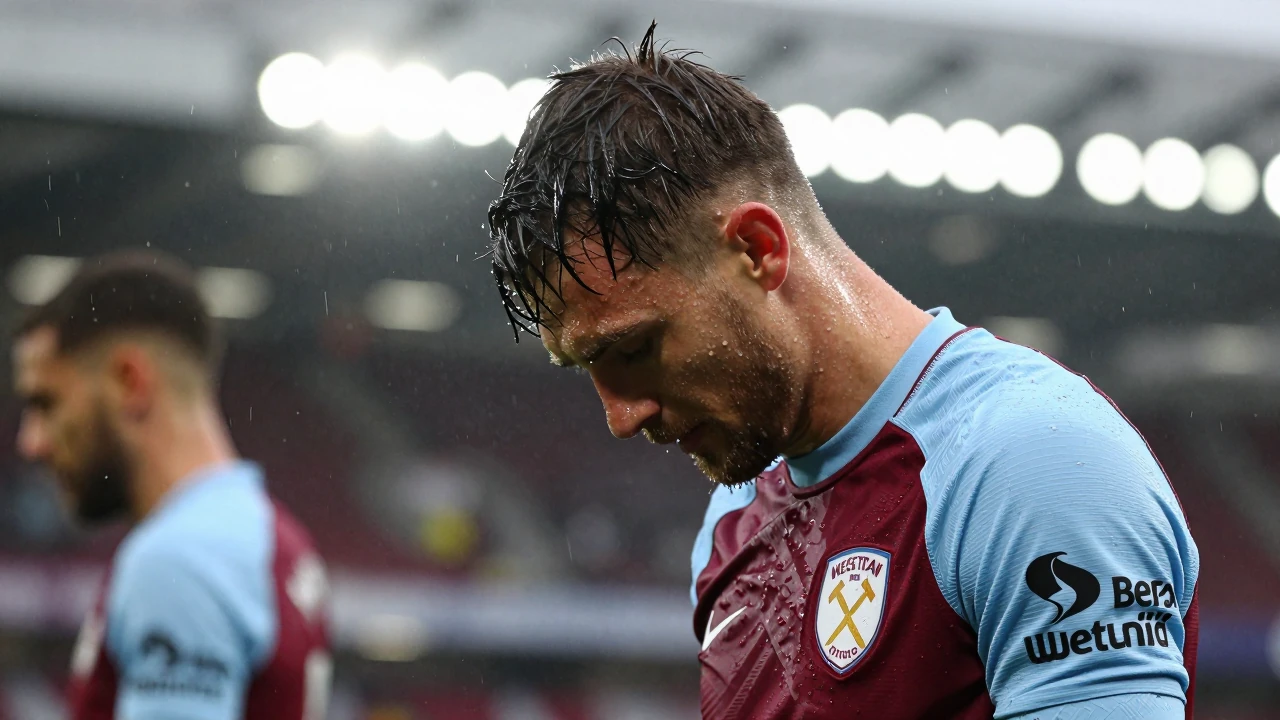
Former West Ham United defender Tony Gale has launched a stinging critique of the club's transfer market failings, claiming a lack of strategy has left them exposed in the Championship. His comments come as the Hammers prepare for their next fixture against Wolves at home on 2026-09-01.
Gale, who made over 300 appearances for West Ham, argues the club's recruitment has been fundamentally flawed. He believes West Ham have been reactive rather than proactive, only moving to address weaknesses once they become glaringly obvious. This short-term approach, he suggests, has prevented the building of a coherent and balanced squad capable of sustained success.
Tony Gale points to a chronic lack of foresight and planning at the London Stadium. He states there has been constant turnover among key decision-makers like directors of football. This instability has created a disjointed recruitment process with no clear, long-term vision. Instead of building a squad piece by piece, the club has lurched from one crisis to the next, making expensive signings that often fail to fit a cohesive plan.
This reactive model has made the club vulnerable, according to Gale. "West Ham seem to have been more reactive than proactive in the transfer market, taking action when a weakness is exposed," he said. The result is a squad that oscillated between European pushes and relegation battles during their 14-year Premier League stay, before finally finishing 18th last season and suffering relegation.
Gale uses local rivals Fulham as a direct contrast to what he sees as West Ham's failures. He is emphatic in his praise for the Cottagers' model. "Fulham’s buying strategy has been far and away the better of the two," Gale stated. Promoted in 2022, Fulham have established themselves as a stable mid-table Premier League side, with finishes of 10th, 13th, 11th, and 11th over the past four seasons.
Their approach focuses on identifying players with development potential and good sell-on value, building a balanced squad for the long term. This disciplined strategy stands in stark contrast to West Ham's heavy spending without a clear blueprint. Gale implies West Ham have failed to replicate any such effective model, leaving them in the Championship while Fulham enjoy Premier League stability. Fans can compare the current league positions on our standings page.
The ultimate consequence of this flawed strategy is West Ham's current status. Relegation after 14 years in the top flight is a stark outcome for a club that has invested significant sums. Gale suggests that agents have exploited the club's disorganised approach, referencing former manager Harry Redknapp's old saying that 'They'll have your trousers down.'
This has led to poor value in the market and a squad lacking balance. The club now faces the tough task of rebuilding in the Championship with a bloated and imbalanced group of players. The need for a clear plan is more urgent than ever as they fight for promotion. Supporters can track the squad's composition on our squad section.
For West Ham to progress, Gale's analysis suggests a complete overhaul of their recruitment philosophy is required. The club must move from a reactive stance to a proactive one, with a clear identity and a strategy designed to build a squad over several windows. Stability in the boardroom and a unified vision between managers and directors of football are essential first steps.
Learning from clubs like Fulham, who plan for sustainability and player development, could provide a blueprint. As West Ham United embark on their Championship campaign, the lessons from past transfer failures must be heeded. The immediate focus is on the pitch, starting with the Wolves match, but long-term success depends on fixing the problems highlighted by Tony Gale. The full schedule for this key season is available on our fixtures list.